
How to Use Colour in Your Home: A Guide
Need help choosing colours for your home? Colours have different meanings and effects on our brains and bodies, which is why choosing the right colour or colour combinations is so important to creating your dream home.
For example, you may want your bedroom to feel calm and relaxing, while your home office sparks creativity and motivation - colour plays a big role in how a space both looks and feels.
If you’ve recently scrolled through Pinterest, you may be feeling overwhelmed wondering how those cohesive colour schemes came together, but don’t panic. We’ve put together some easy-to-follow steps to help you get started.
We’ll explore how to use colour in your home - from letting your furniture guide you to the meaning behind colour and how to use the 60/30/10 rule to get your space looking like you’ve hired an interior designer.
fixed features: work with the colours already in your home
Now, unless you’re starting with a blank canvas like a new-build, step one will be to identify the parts of the home you can’t change or features you definitely want to keep. For example, period features such as ceiling roses or Victorian tile flooring, fireplaces, windows and so on.
The colours of these fixed features will then act as a guide on how to style the rest of the space. For example, if your room features dark flooring, you may want to combine this with a lighter wall colour. This helps lift the energy of the space from dark and gloomy to calm and warm as you thoughtfully pair together colour combinations that work.
Fixed home features can sometimes be seen as a drawback, but they can actually work to your advantage. It’s all about working with what you’ve already got, highlighting key features within your home that bring out your personality.
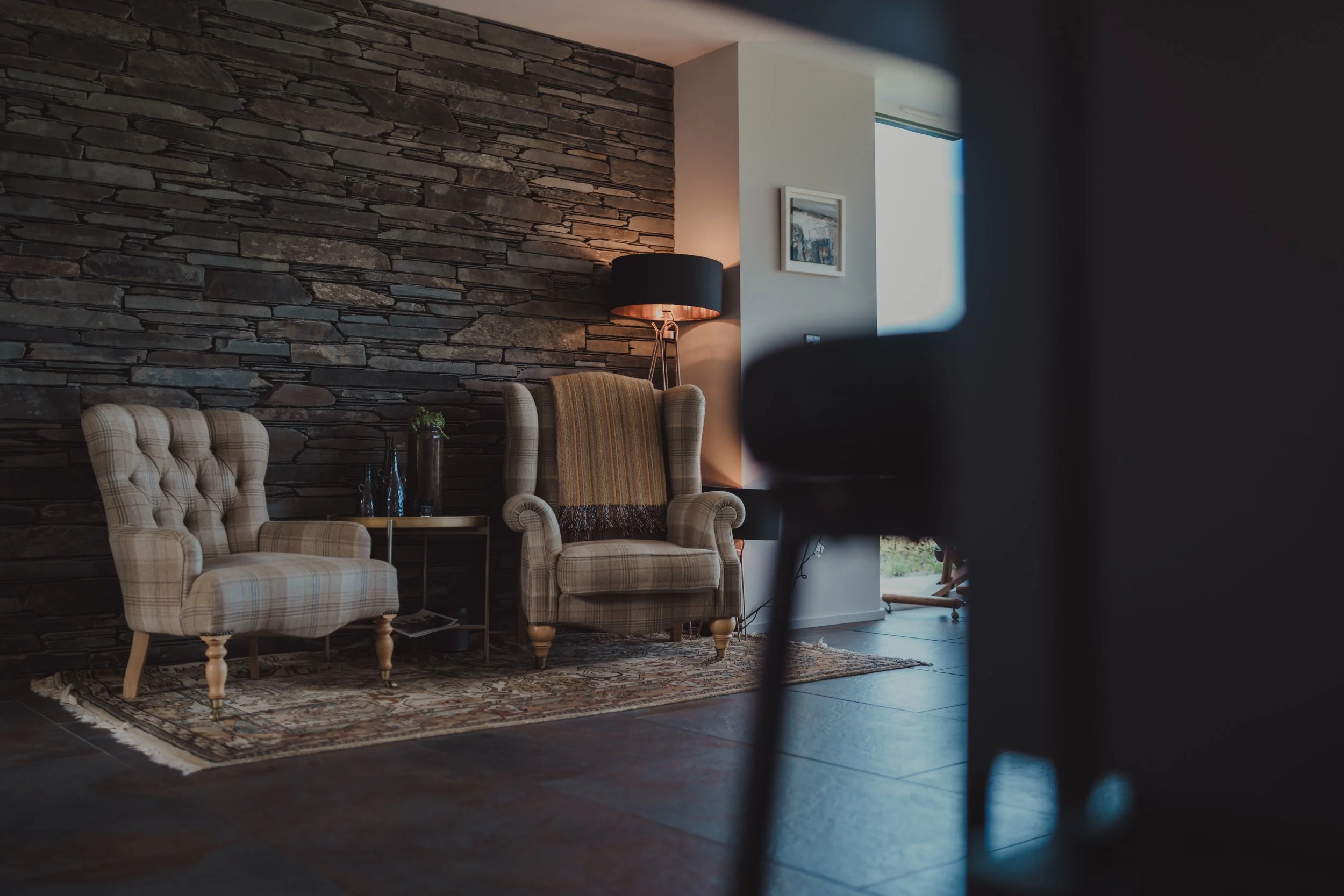
Dark fixed features can be offset with lots of natural light and light-coloured walls and furnishings.
The Best Colours For Every Room
Before choosing a colour, ask yourself, "How do you want this room to make you feel?"
By understanding how different colours influence our emotions and behaviour, we can create a room that reflects exactly how we want to feel in the space.
Let’s take a look at what each colour means.
Warm Colours
Red
Stimulates adrenaline
Pairs well with other colours
Strength, passion, and confidence
Red shades are ideal for a lively living room or space where you need your brain to be active and energetic.
Orange
Strong and eye-catching
Shares the strength of Red, while bringing the mellowness of yellow
Warm, energetic, inviting
A child's room screams for orange; it gives a vibrant energy to encourage play and creativity.
Yellow
Often used as an accent colour
Associated with nature and positivity
Cheerful, bright, bold
Accenting a bedroom with yellow would be perfect! The brightness imbues energy first thing in the morning.
Cool Colours
Green
Most natural and comfortable colour to the eye
Dark shades are relaxing, whereas lighter shades are refreshing
Health, nature, food
Green is often used in kitchens, and is a very versatile colour depending on the different shades used.
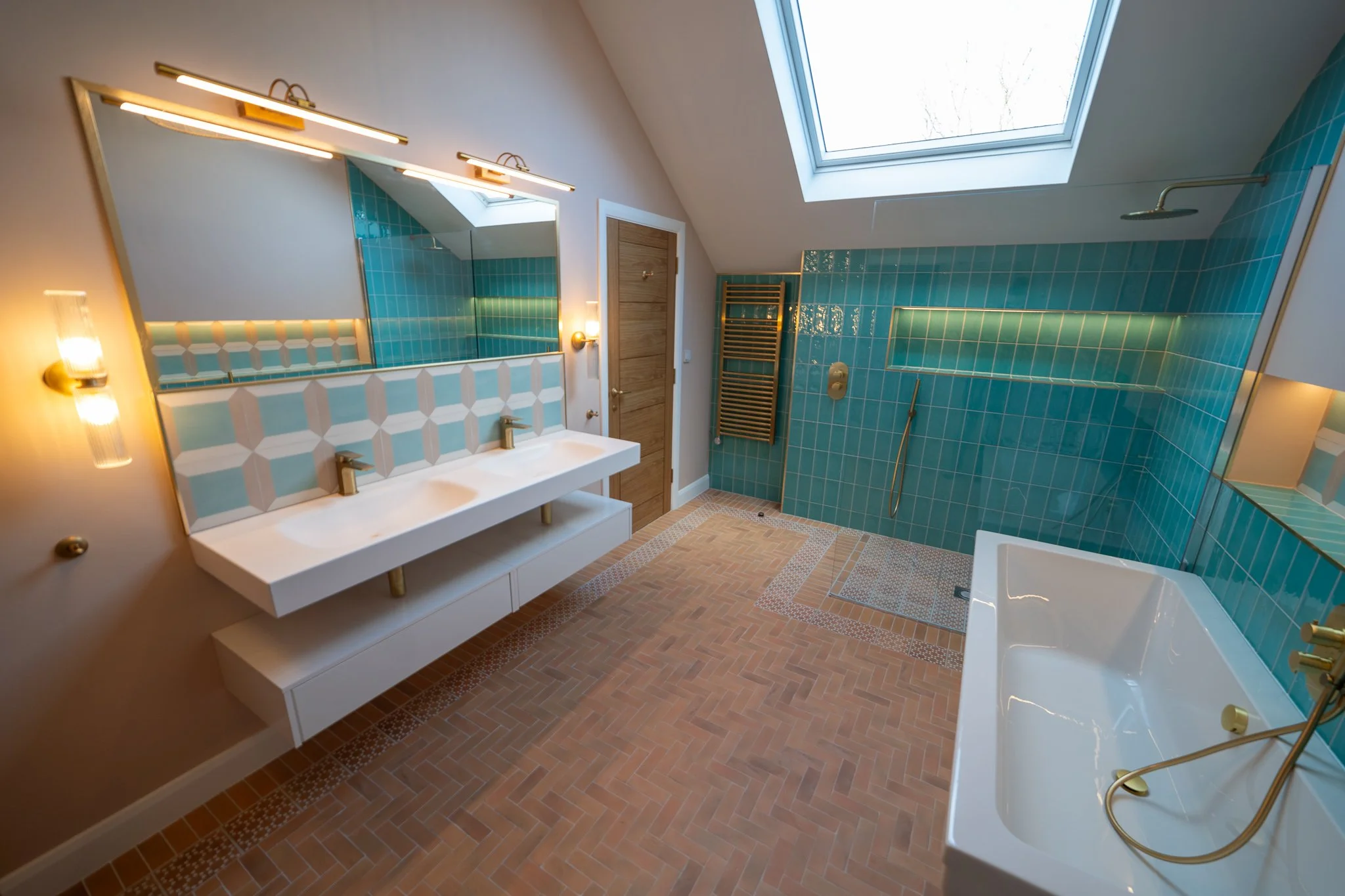
A beautiful, vibrant tile can be contrasted and complemented by a clean off-white.
Blue
A long-established timeless colour throughout history
Trustworthy, calming, friendly
Blue works really well in a hallway or staircase, a great first impression for any visitor.
Purple
Combining the energy of red and the mellow of blue
Often associated with royalty due to its rarity as a dye
Luxury, creativity, spiritualism
A dining room in purple can bring a sophisticated and luxurious feel to your space.
Neutral Colours
Grey
Calms almost any space
Works as a great neutral colour for furniture
Balanced, sophisticated, quiet
If you have a really bright primary colour, grey may temper it nicely, giving equilibrium to a chaotic space.
White
Can be paired with almost anything
Create breathing room and space for something complex
Purity, cleanliness, simplicity
White is the most versatile colour and lends itself to just about any room for a minimalistic and modern feel.
Black
Creates a bold, moody and modern feel
Minimalist, decadent, polished
When used thoughtfully, black can create a striking and sophisticated space, especially in a kitchen.
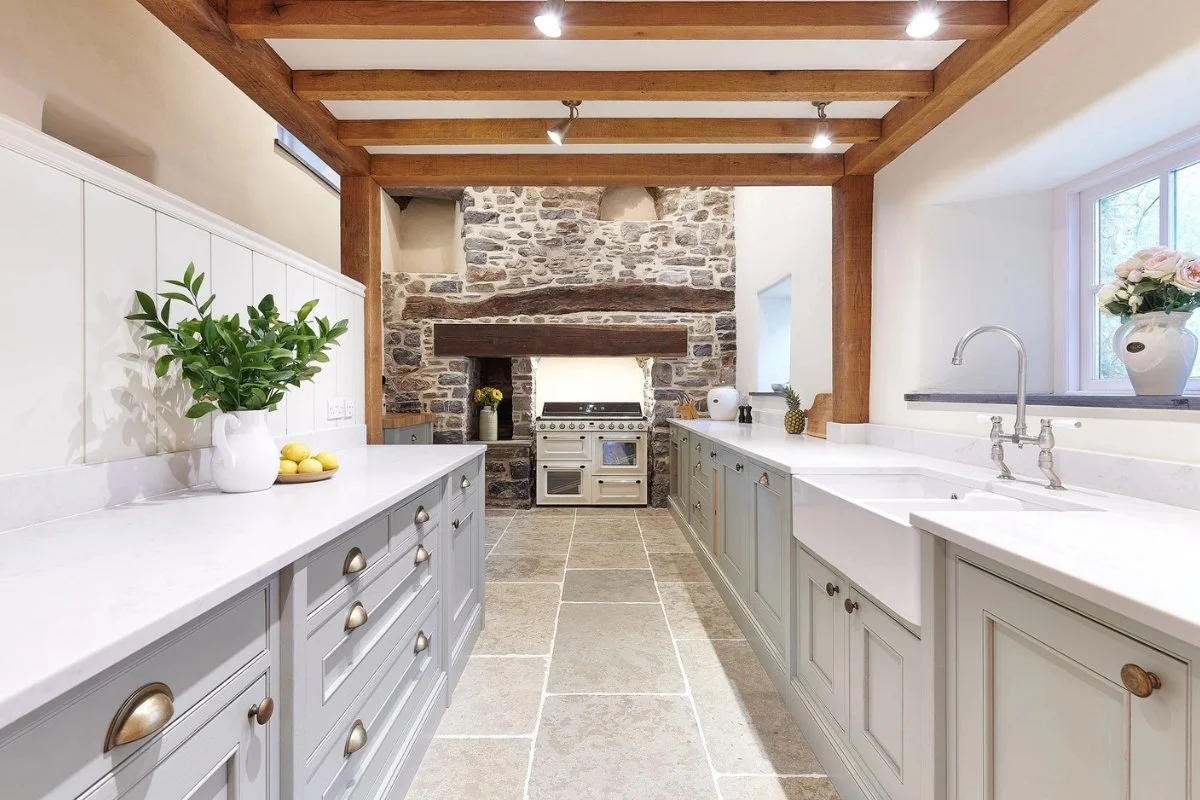
Create a bright, clean space using neutral colours that complement each other.
How to Choose THE BEST COLOUR Combinations For Your Home
Now you know the colours and the meanings behind them; let’s start putting them together using the 60/30/10 rule.
The 60/30/10 rule is an easy-to-follow guide used by interior designers to create spaces that feel balanced, cohesive, and visually interesting. The idea is simple: 60% of the room should feature the primary colour, 30% should be the secondary colour, and the remaining 10% should be an accent colour. This combination creates harmony while adding enough contrast to make the space feel dynamic and inviting.
To start, test and combine colours using the 60/30/10 rule and create a range of exciting colour combinations for your home. As we learnt early on, fixed features can also help set the mood, along with artwork and other home accessories, so don’t get too hung up on dividing up your wall into exact percentages - think of the space as a whole.
That being said you don’t have to follow this rule and sometimes designers like to break it to try and achieve a particular style however, it acts as a great starting point to finding a coherent colour scheme.
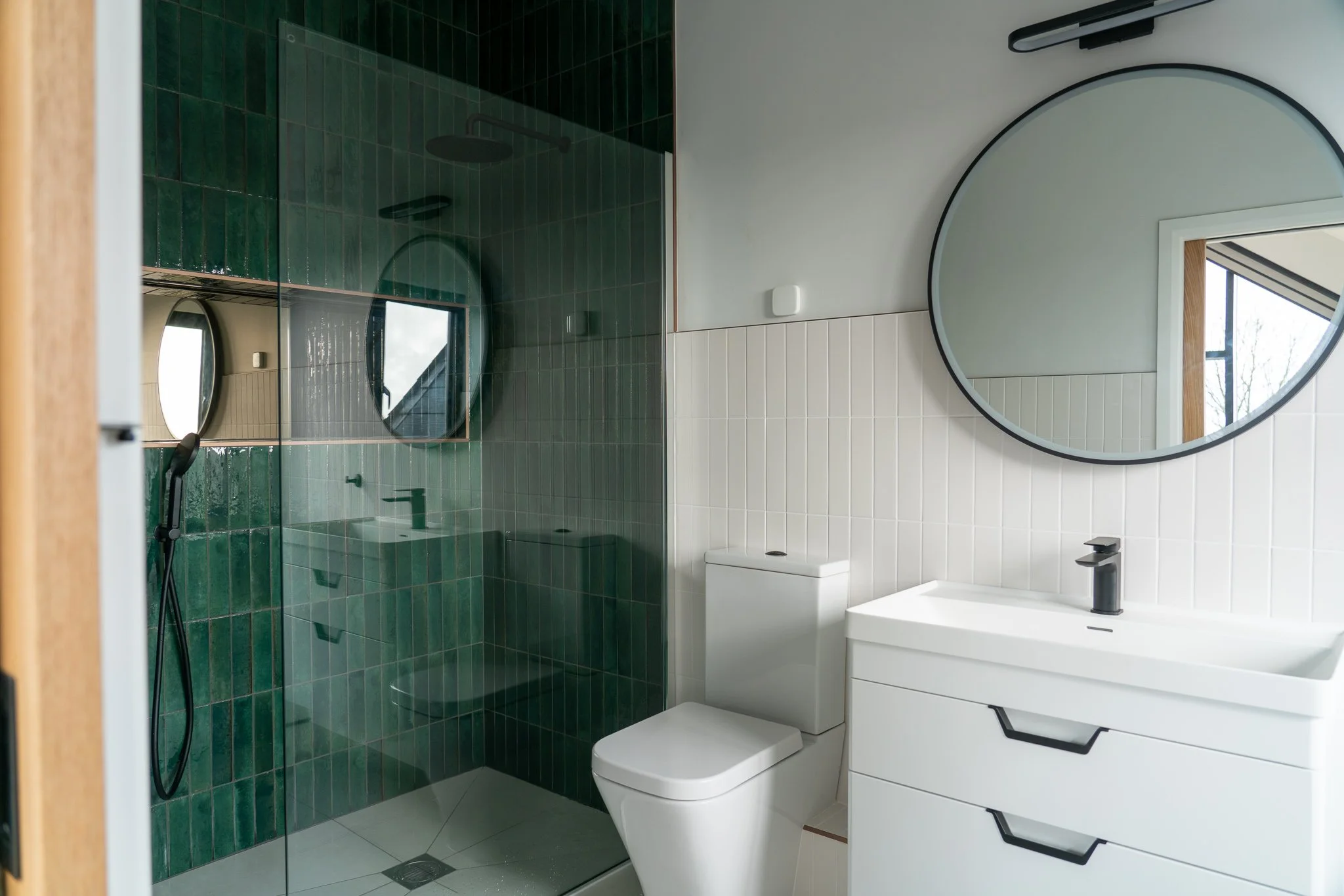
60% white, 30% dark green, and 10% black creates a beautifully balanced and cohesive bathroom.
STILL NEED help choosing colour in your home?
At Cwtch Haus, we can help you choose the right colours for your space. Whether you’re starting from scratch, redesigning your entire home or want to upgrade a single room, we can help bring your vision to life.
With over 15 years of experience, we know how to create stylish, cohesive interiors that not only look beautiful but also reflect your personality and the way you want your home to feel.
Looking for inspiration? Explore our portfolio of kitchens, bathrooms and bedrooms or get in touch with the team today to discuss your ideas for your next home project.
